Clarkston Giving Week(end): Students Driving Community Impact Through Action
Reflections from a Philanthropy Sprint

“Access changes everything—but only when it is intentional and sustained.” Shalom Alugwe 26MBA shared this during the Clarkston Giving Week(end), and it stayed with me long after the final grant was awarded. It named what many philanthropic efforts get wrong: good intentions, without thoughtful design and lasting commitment, are never enough.
Just five miles from Emory’s Atlanta campus lies Clarkston, often called the “Ellis Island of the South.” Over the past four decades, it has become home to more than 150 ethnic groups and over 60 languages, shaped by ongoing refugee and immigrant resettlement that continues to define its identity.
This March, I had the opportunity to coach a student team during the Clarkston Giving Week(end), led by Brian Goebel and co-instructor Tene Traylor through Goizueta’s Business & Society Institute (BSI). As a Social Enterprise Fellow, I expected an enlightening experience in the way BSI programs usually are. What I didn’t expect was how quickly it would shift from learning about philanthropy to confronting what it actually requires: humility, empathy, and proximity.
Rethinking Philanthropy
The Clarkston Giving Week(end) was a one-credit “sprint” version of the Emory Philanthropy Lab, built around the idea of global-local philanthropy—that migration, displacement, and inequality are not distant systems, but lived realities shaping neighborhoods just beyond campus, and that business skills can be a powerful tool for responding to them.
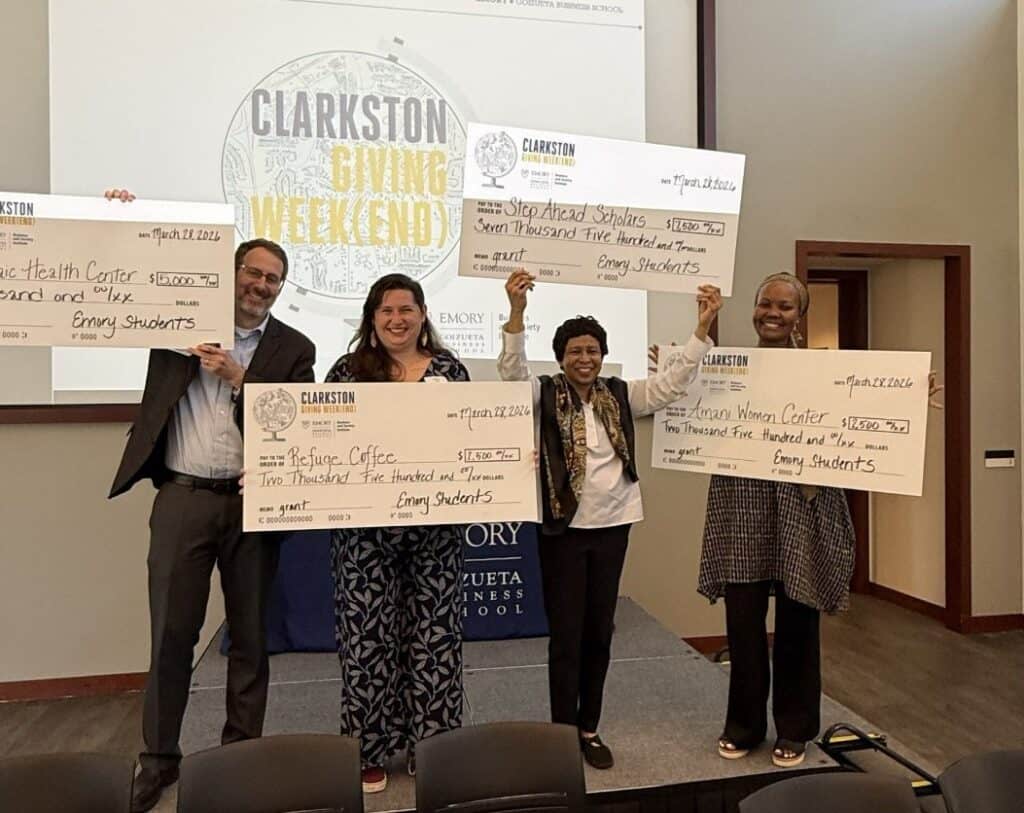
With responsibility for allocating $17,500 in funding to Clarkston-based nonprofits, the experience pushed students to grapple with questions that rarely have clear answers: How do you compare impact across organizations with different missions? How do you balance quality care with scalability? And how do you make funding decisions when every option represents urgent need?
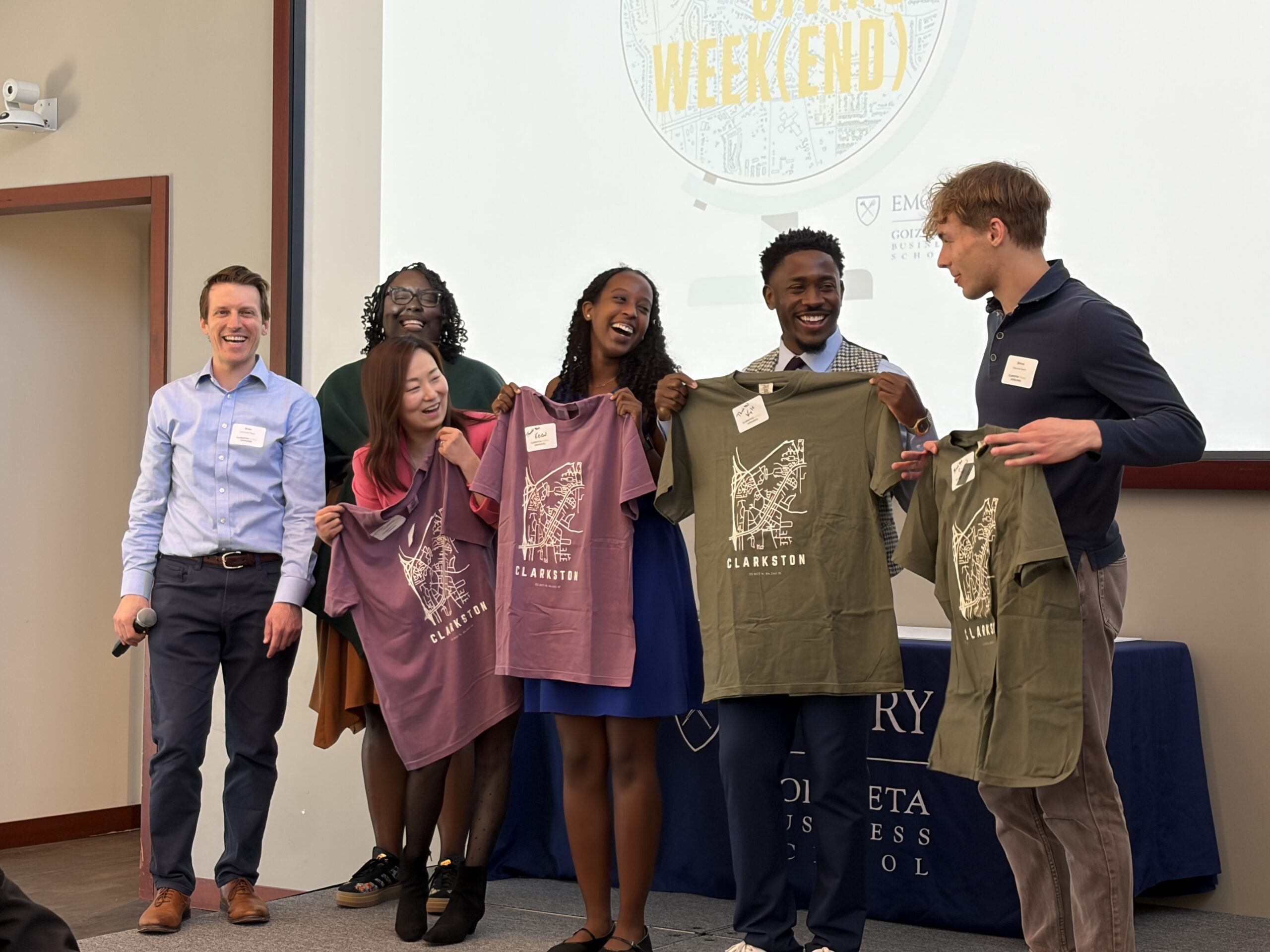
Student leaders Eden Melka 27BBA, Simon Stumbris 26BBA, and Kyle Walcott 26MBA helped shape the experience. For Simon, “It was a chance to keep learning and also help create something that pushes others to engage with impact in a real and present way.” Kyle reflected more broadly: “The art of philanthropy, charitable giving, and socially conscious investments embodies the heart of what it means to care about society and genuinely want to make a difference in the world.”
Moving From Observation to Proximity
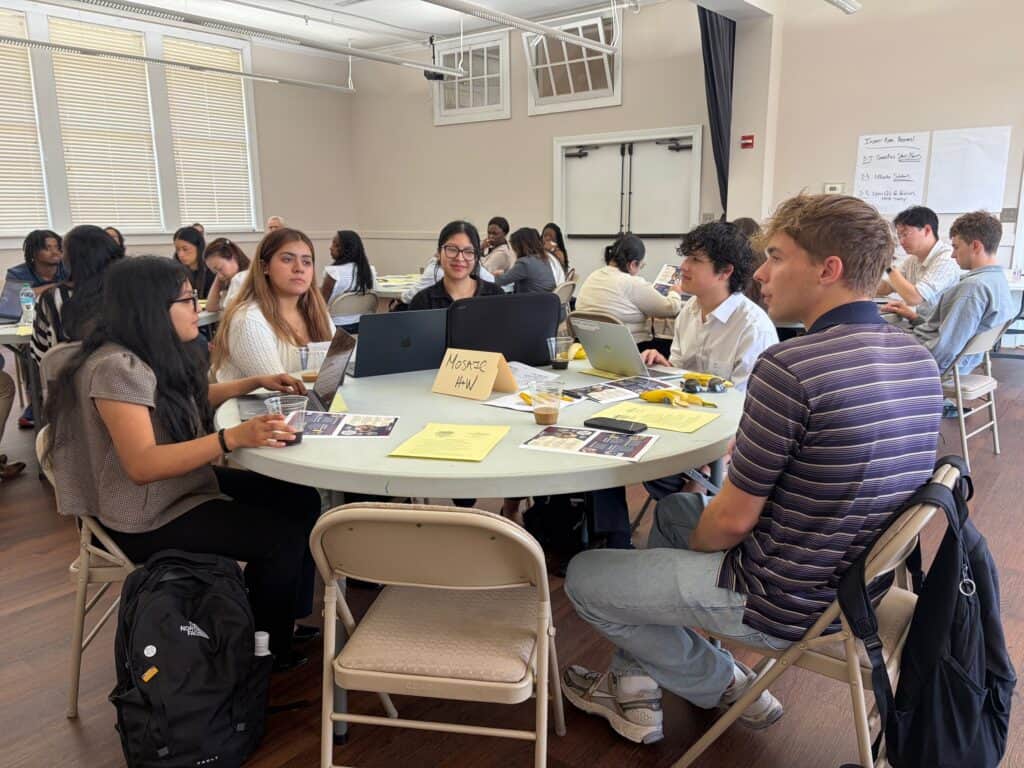
Before arriving in Clarkston, students were organized into teams, each assigned a nonprofit partner. They then spent a week analyzing nonprofit financials, studying organizational strategy, engaging with different philosophies of giving, and examining their own views on it.
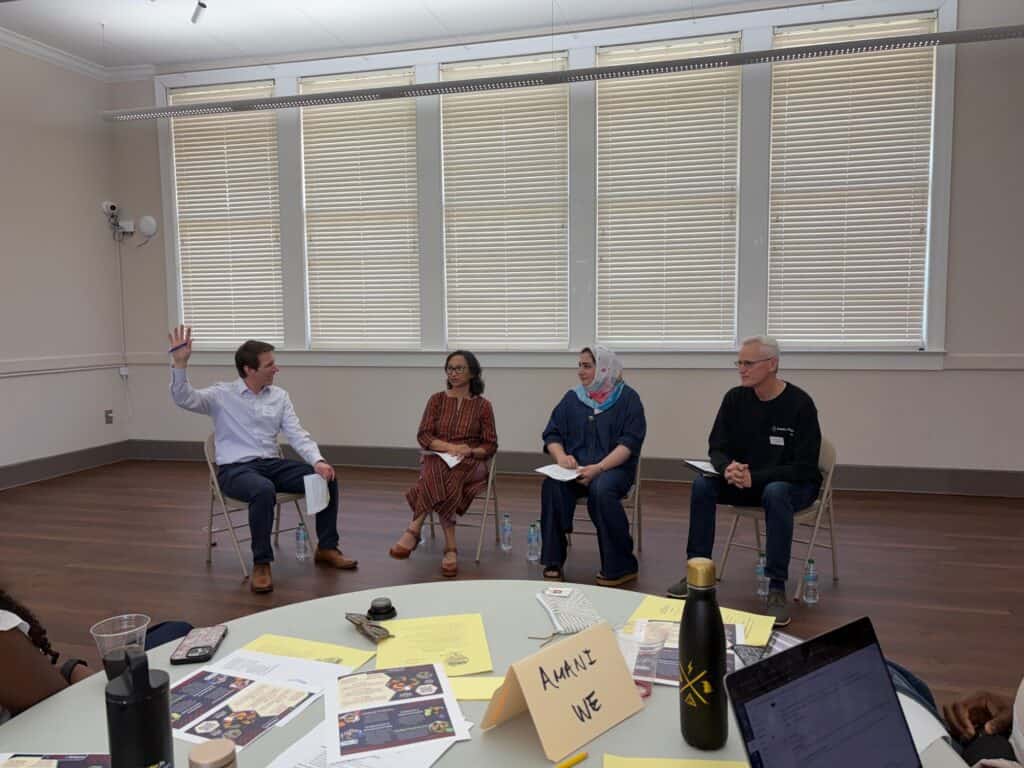
The weekend intensive opened at the Clarkston Community Center, where nonprofit and civic leaders shared the city’s history and brought the frameworks we had studied to life through lived experience. Students then visited their nonprofit partners to see their work in action. It quickly became clear that Clarkston’s nonprofit landscape is not fragmented, but deeply interconnected, with organizations operating within walking distance of one another.
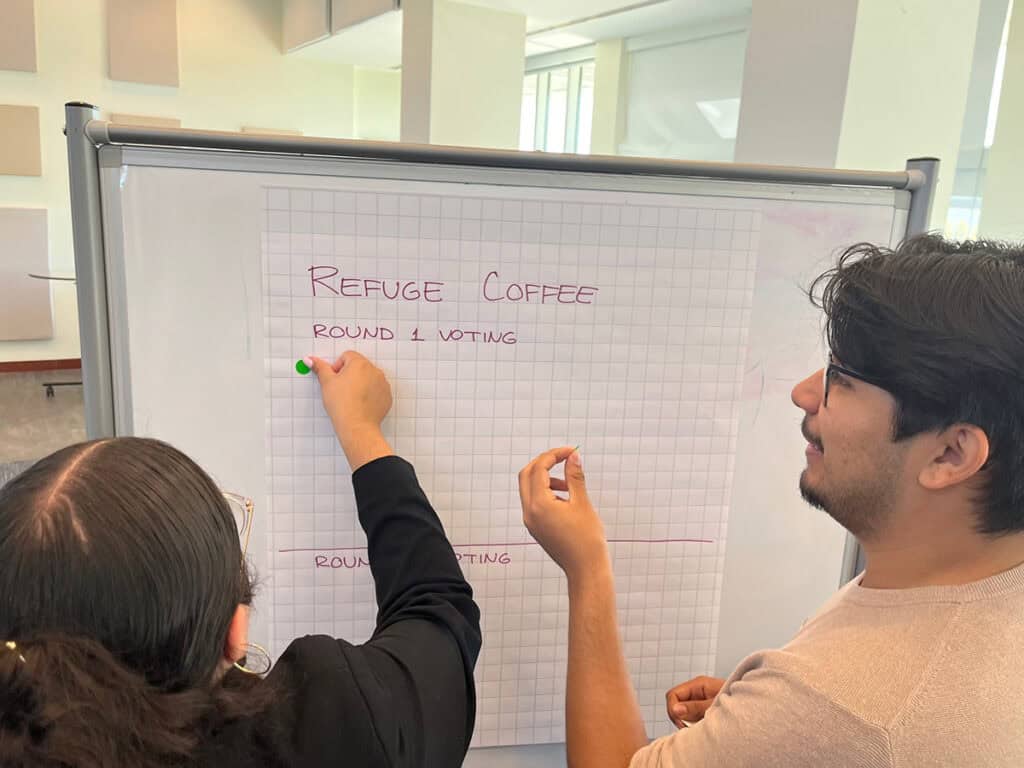
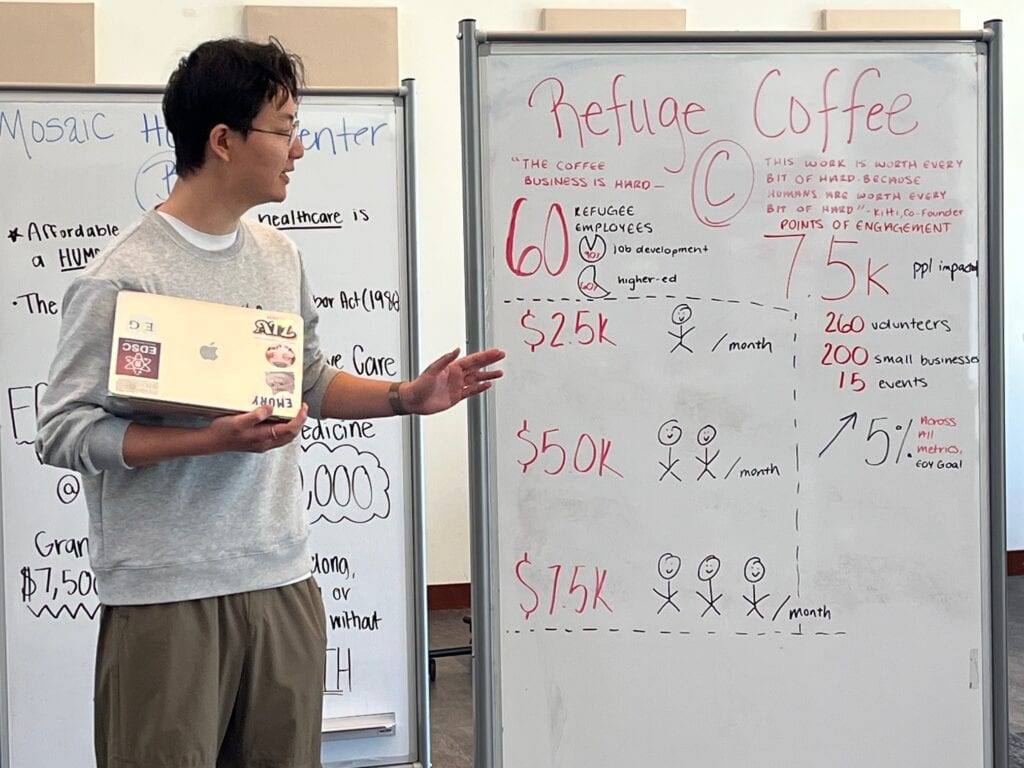
On the final day, students reconvened at Goizueta for the Decision Workshop and Giving Ceremony, where each team delivered a five-minute advocacy pitch before voting on final grant allocations. The presentations reflected both rigorous analysis and emotional investment from the student teams. Proximity had done its work: students were no longer evaluating organizations in the abstract, but advocating for communities they had come to know.
What struck me most was not the impressiveness of the presentations—though they were impressive!—but the care behind them. I saw this clearly while supporting the Step Ahead Scholars team, whose presentation seamlessly wove together data, nonprofit philosophy, leadership interviews, and field observations into something that was technically excellent as well as deeply human. They had been moved by the stories they heard, and their empathy strengthened their pitch.
Voices from the Week(end): What Students Carried Forward
For many, the experience reshaped how they understand philanthropy and leadership.
“Seeing every organization receive support made the process feel very real,” said Claudia Zanjanchian 26EvMBA, adding that “true impact requires doing the legwork to understand an organization’s operations and asking the right questions to ensure resources are used effectively.”
Titi Shehu 26MBA reflected, “Organizations like Amani Women Center and Refuge Coffee are actively building belonging, dignity, and opportunity in real time. I now see philanthropy as capital, capability, and commitment.”
Nonprofit partners felt the impact too. Debra Nealy, Executive Director of Step Ahead Scholars, described the grant as “an investment in the Clarkston community, its families, and its next generation of changemakers.”
What Clarkston Makes Impossible to Unsee
At the end of the week, students wrote letters to their future selves in 2036. Together, they revealed a shared shift: students were not just thinking about philanthropy, but about how they want to live. Several themes emerged consistently:
- Philanthropy is so much more than money moving between donor and recipient. It’s about trust and long-term engagement.
- Global issues are local. Refugee resettlement, immigration, and educational inequity are unfolding minutes from campus.
- Giving does not need to be delayed. Many students embraced Chuck Feeney’s “Giving While Living” philosophy — giving, volunteering, and advocating now.
- Dignity was the central thread. The most impactful organizations built belonging and long-term pathways, not just delivered services.
Looking Ahead: What It Means to Stay Close
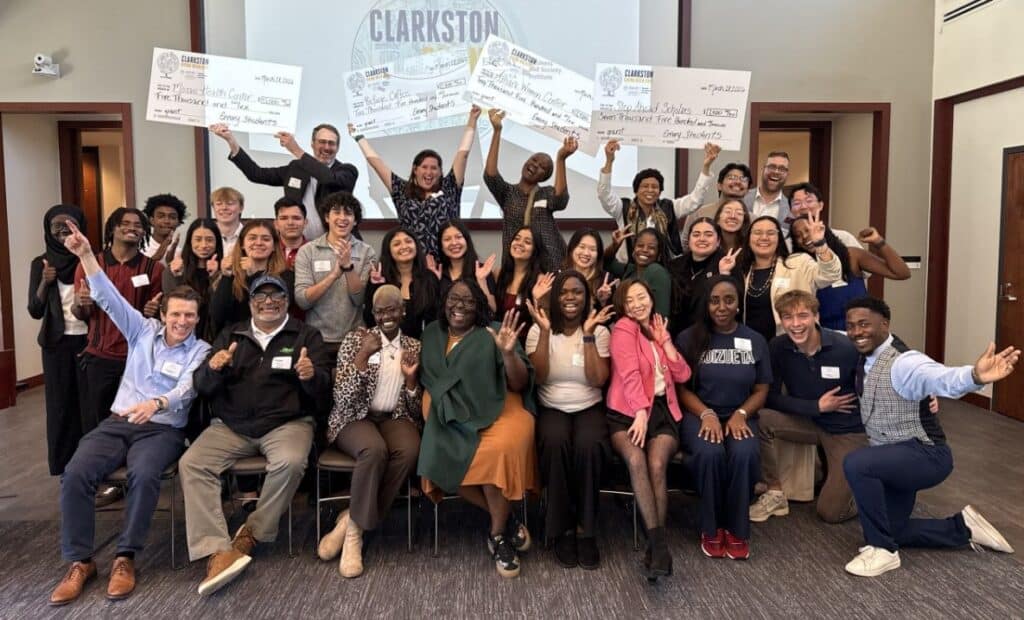
The Clarkston Giving Week(end) ultimately made one thing clear: philanthropy is not a milestone reached after success — it is a way of moving through the world now, through attention, consistency, and relationship. The $17,500 awarded will support critical work, but the more lasting impact may be how participants now understand their role in the world.
For me, this experience reaffirmed something I often see through BSI: there is real hope in how business students are choosing to invest their time, money, and expertise. We’re not ok with passively watching injustice happen in our backyards. We want to use what we’ve learned to help — not as a savior, but as a friend.
The work in Clarkston is ongoing. So is the responsibility to stay close enough to see it clearly.
2026 grantees include Amani Women Center, Mosaic Health Center, Refuge Coffee, and Step Ahead Scholars—each working at the intersection of education, health, economic mobility, and community belonging for Clarkston’s refugee and immigrant residents.
