
Slowing Down in Guatemala and Thinking About What Business Can Be For
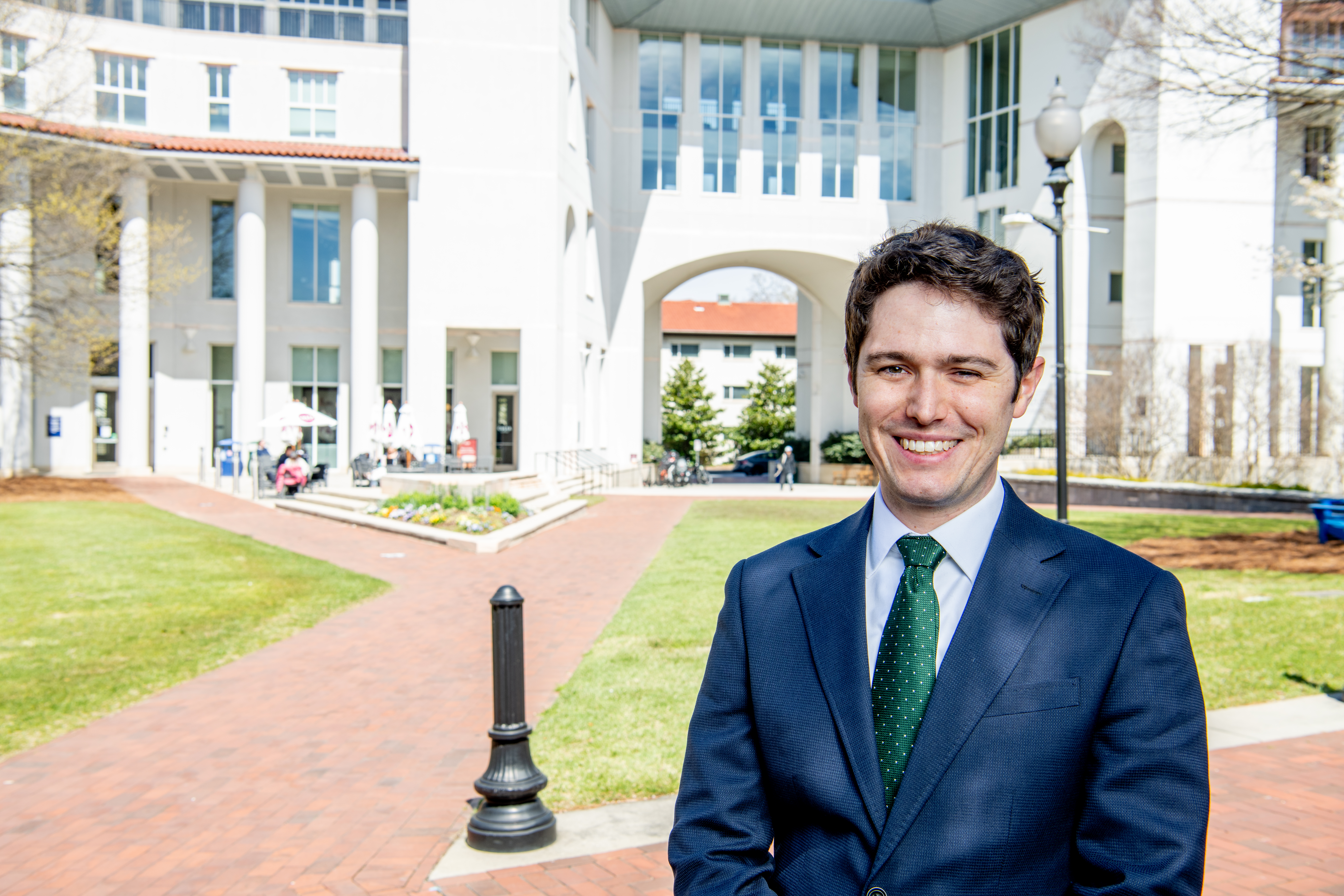
MBA programs move fast. As Dean Brian Mitchell says, “the days are long, but the weeks are short.” The intense cadence of business school has pushed me to learn fast and grow professionally, and I’m grateful for this. However, as I entered my final semester, I wanted to take time to contemplate what I had learned. In business school, there’s a risk of learning and using new terms like “value chains,” “product differentiation,” and “market entry” without really thinking through what these concepts mean in the real world, for real people. Thanks to Goizueta Business School‘s Business & Society Institute, I had the opportunity to travel to Guatemala during my final spring break to learn about the local coffee industry; this proved to be an ideal environment to slow down, shift my perspective, and think about what I might be able to do in my post-MBA career to effect positive change.
From the Classroom to Guatemala
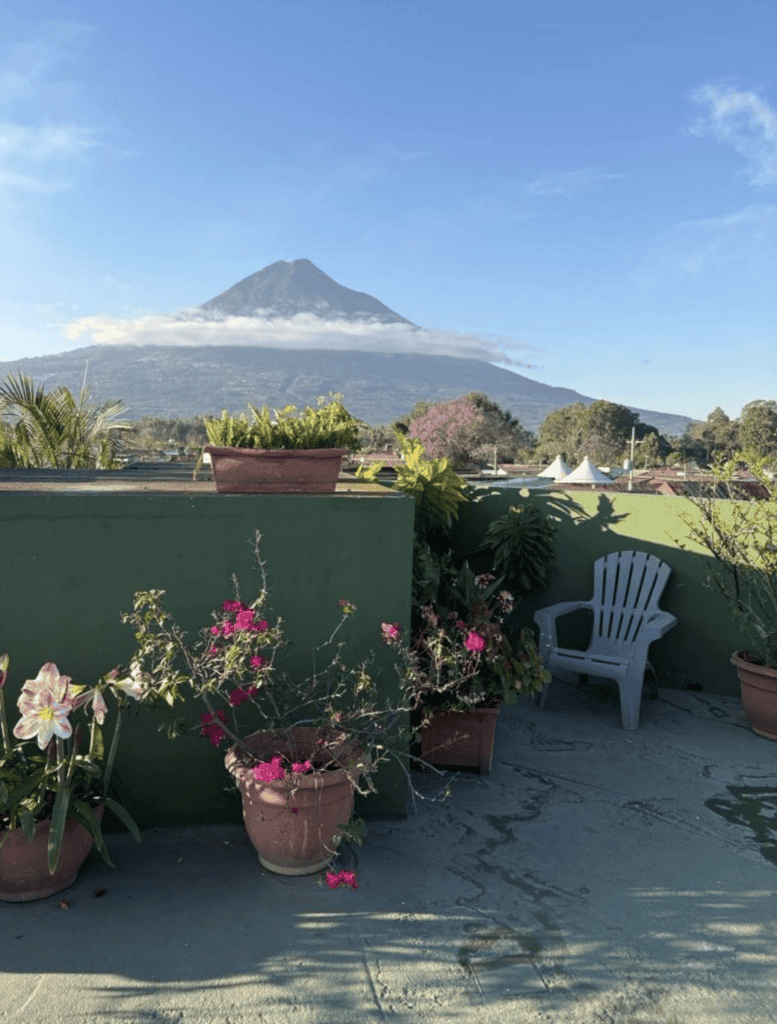
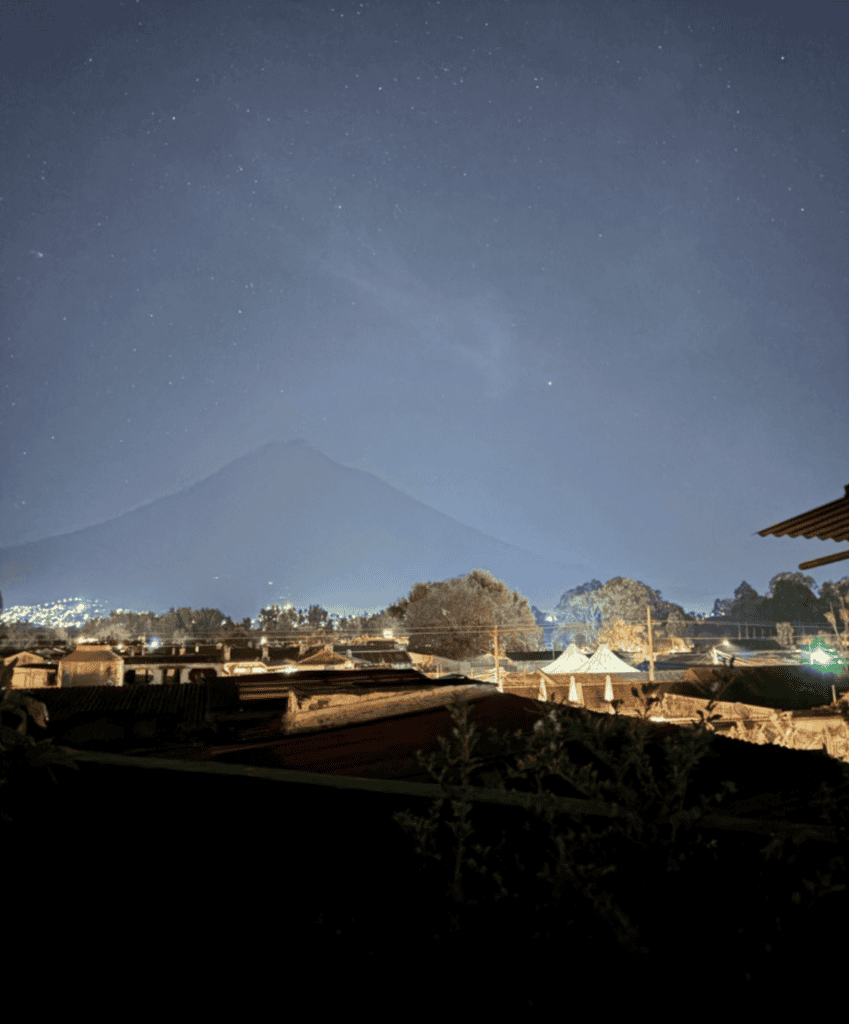
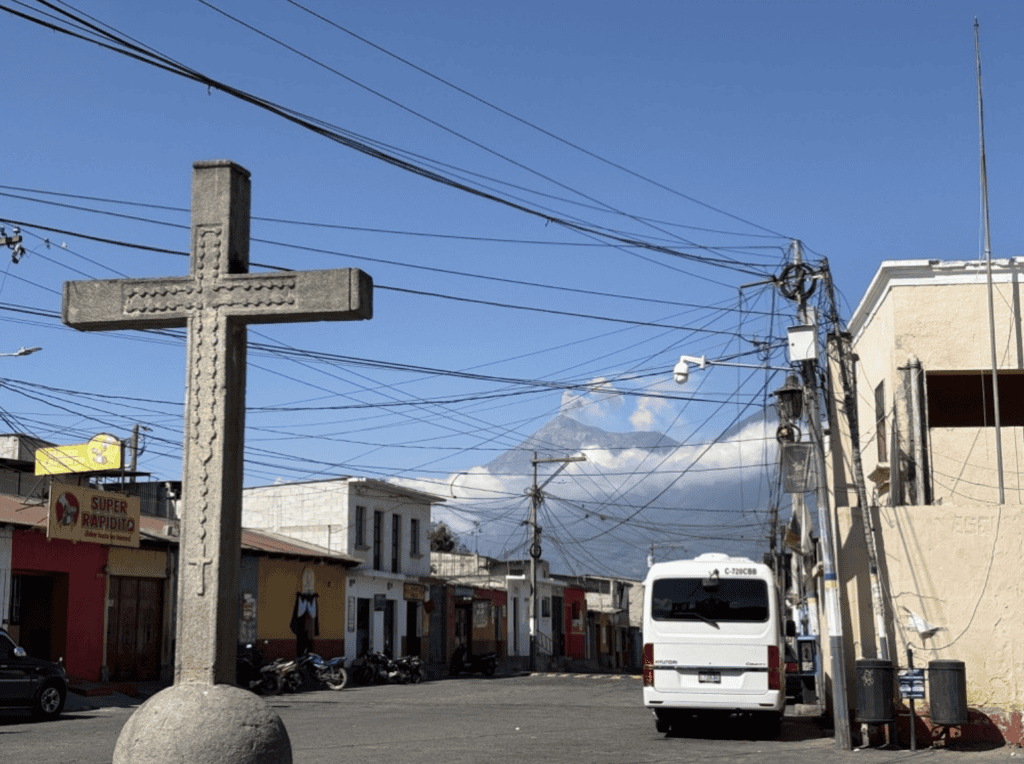
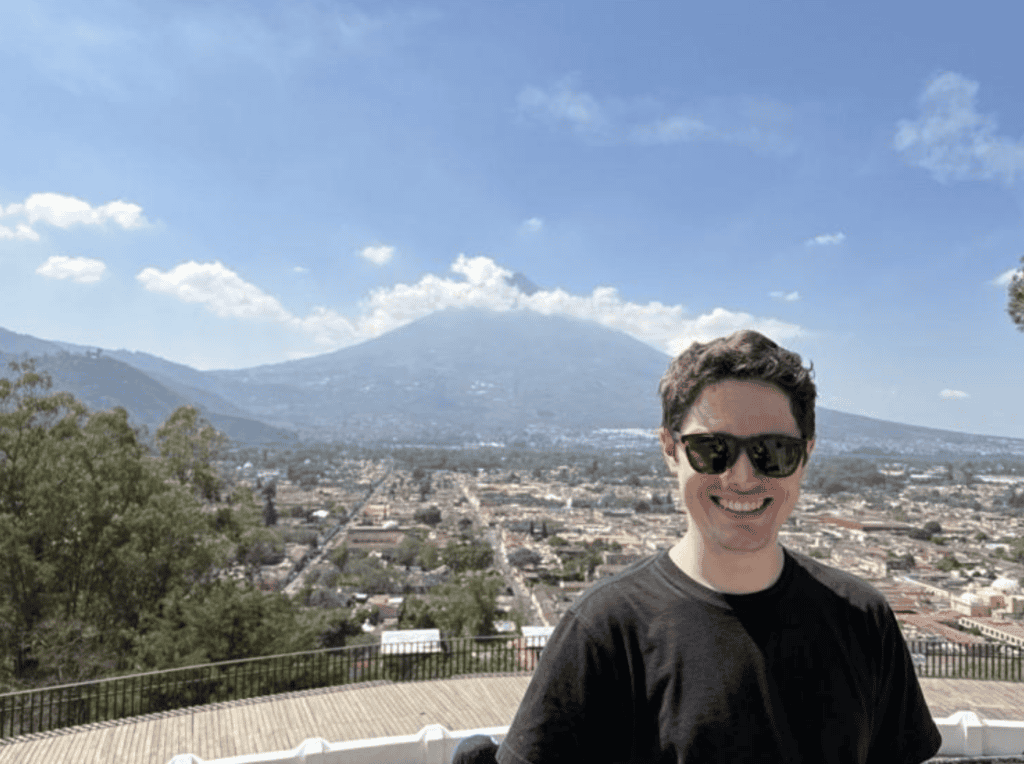
I traveled with a group of eight Emory students and faculty, including Dr. Peter Roberts. Dr. Roberts is one of the institute’s affiliated faculty and has spent over a decade researching specialty coffee and meeting with industry players in Central America to identify opportunities to empower small coffee producers. We were in Guatemala for just under a week, with most of that time spent in Antigua, a colonial-era capital full of ornate historical architecture and cobblestone streets. Antigua is also in the heart of coffee-growing territory; it’s tucked into a valley between three imposing volcanoes: Agua and Acatenango (which are extinct/dormant) and Fuego (which is still very much active and “burps” plumes of smoke and ash into the air multiple times a day!). We also visited Guatemala City, the national hub for business, finance, and trade, as well as the town of San Miguel Escobar, where many small-scale coffee producers live and work.
Seeing the Value Chain in Real Life
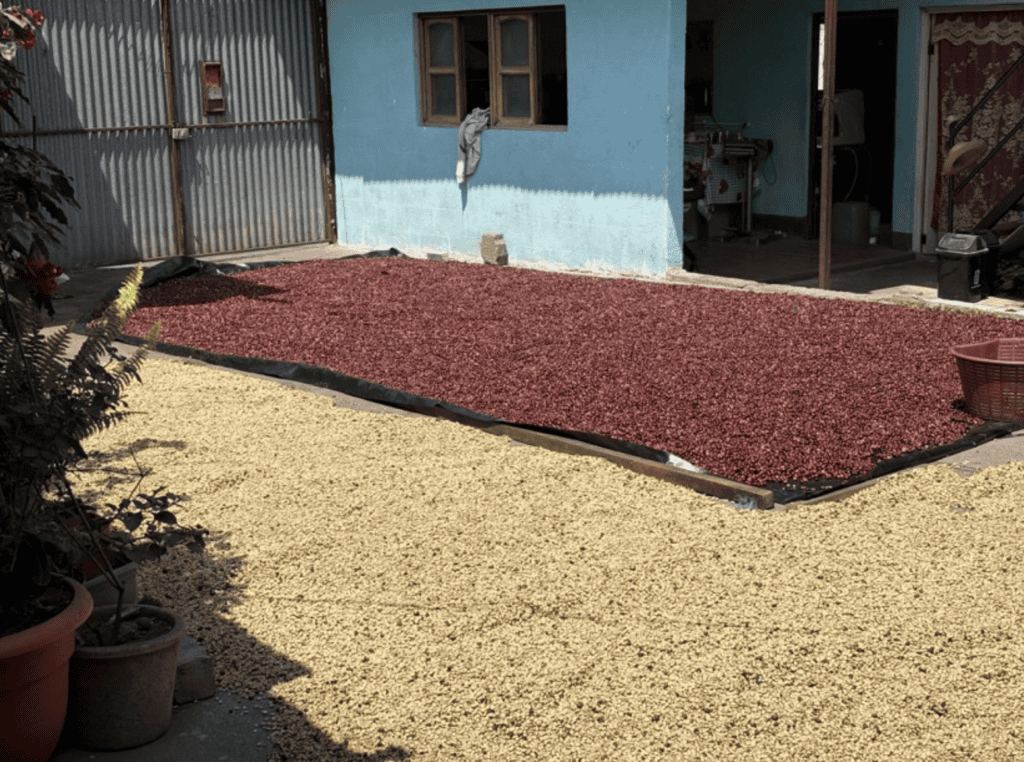
Seeing the coffee industry up close – from coffee tree to steaming cup over a single day in one case – helped me concretize the concept of a “value chain” in a way I never could in a classroom. There’s real, hard work that goes into every step of the process of getting a cup of coffee ready to drink, and there are real, human stories inseparable from each of those steps. In Guatemala, I learned about the care and expertise that goes into raising coffee plants; the careful eye required to harvest good coffee cherries over many hours in the field at the harvest; the risks inherent in organizing the capital to buy de-pulping, washing, and roasting machines; and the passion and artistry that baristas bring to bear to create a great experience for the drinker. Steps in a value chain aren’t abstract because people are essential to creating value.
That said, not everyone involved in the coffee value chain gets fair compensation for the value they add. Small Guatemalan producers grow coffee that garners international recognition, but for many, the status quo remains selling to middlemen who cite the international commodity price for undifferentiated, lower-quality coffee, or worse, offer to swap coffee directly for staple foods like corn and beans. In this context, the concept of differentiating a product to command a higher price takes on a new urgency. One of Dr. Roberts’ ongoing projects involves working with small-scale coffee farmers to develop and share their professional stories: their craft, their goals, and what working in the coffee industry means to them. Stories can spark connections between producers and the international coffee industry, including buyers who recognize quality coffee and are willing to pay above the commodity price.
Stories That Change Markets
During our trip, we had the opportunity to hear the stories of several farmers in San Miguel Escobar; I found their commitment to business as a means for personal and community empowerment striking, along with the pride they took in producing coffee that they know is exceptional. I’ll especially remember hearing from Estela Gonzalez, who was a small child when her parents took the great risk of selling their coffee internationally. Proceeds from those sales enabled her to go to school, and she’s since risen to become the director of her family’s coffee collective. Again, I was able to see how a concept – knowing the worth of one’s own differentiated product – can have a transformative impact on people’s lives.
Bringing It Back to Business and Impact
Our visit to Guatemala City gave me a better sense of how I personally might be able to apply what I’ve learned in school to make a positive impact in the world. We were able to meet with representatives of two companies that seek to link small coffee producers with international buyers on a B2B and B2C basis. The founders of these companies are talented people seeking to overcome the real challenge of international market access, and the way they’ve managed to leverage their professional expertise in economics, trading, and finance to make the industry fairer was inspiring to me. There are ways for talented and dedicated people to make business work better for more people, and I hope I can keep sight of this after I leave Goizueta.
Closing Thoughts
- We had delicious home-cooked meals every full day we were in country, and I’m grateful to the farmers of San Miguel Escobar for opening their homes to us. Anyone visiting Guatemala must try the national stew, Pepián.
- Our first day in Antigua included an excellent historical walking tour, which helped me get a better sense of the sociocultural history of the region, and the syncretic motifs reflecting both Spanish and indigenous traditions.
- I left for Guatemala without knowing anyone else in the group, and six days later felt like I’d developed genuine friendships with people in other Emory programs I wouldn’t normally meet. I think this speaks to the Business & Society Institute as an effective forum for bringing people together from across the university.
- Before business school, I worked to help manage and implement international development projects at a major contractor for the U.S. Agency for International Development (USAID). Although development aid was not a focus of this trip, I nevertheless noted how some of the people and organizations we met with had worked with USAID in the past, and I even found a home goods store in Antigua quite by accident that had received USAID support. This trip underscored for me the way that development agencies have helped catalyze meaningful business growth in the developing world – hopefully, they will be able to do this again one day.
- Anyone looking to learn more about the specialty coffee industry should check out the Specialty Coffee Transaction Guide, which is one of Professor Roberts’ major initiatives; the guide enables small producers to get more insight into what their product may be worth.
- I’m grateful to the Goizueta MBA program office for helping me navigate the process of cross-enrolling in a business Spanish class for my final semester of school – brushing up on the language ahead of time made this trip that much more meaningful.
Interested in engaging in specialty coffee immersive learning experiences? The Business & Society Institute is now recruiting Emory University students (both undergraduate and graduate—from all schools/majors) to enroll in their Fall 2026 3-Credit Specialty Coffee Storytelling Directed Study. Learn more and complete the interest form.
